
The wine of Fargues goes well with a large number of dishes, on the sole condition that it is not confronted with sugar. This is not a dessert wine; on the contrary, Château de Fargues appreciates contrasts.
Multiple combinations are to be explored: with oysters, shellfish, fish especially in sauce, white meats (poultry, pork, veal), game, spicy dishes, blue-veined cheeses, fruit pies or rhubarb.
The artists drink it without anything, at the end of the afternoon at “Tea Time” because the wine of Fargues is enough for itself.
We recommend a hot or warm broth to renew the palate before serving the red wines, if any.
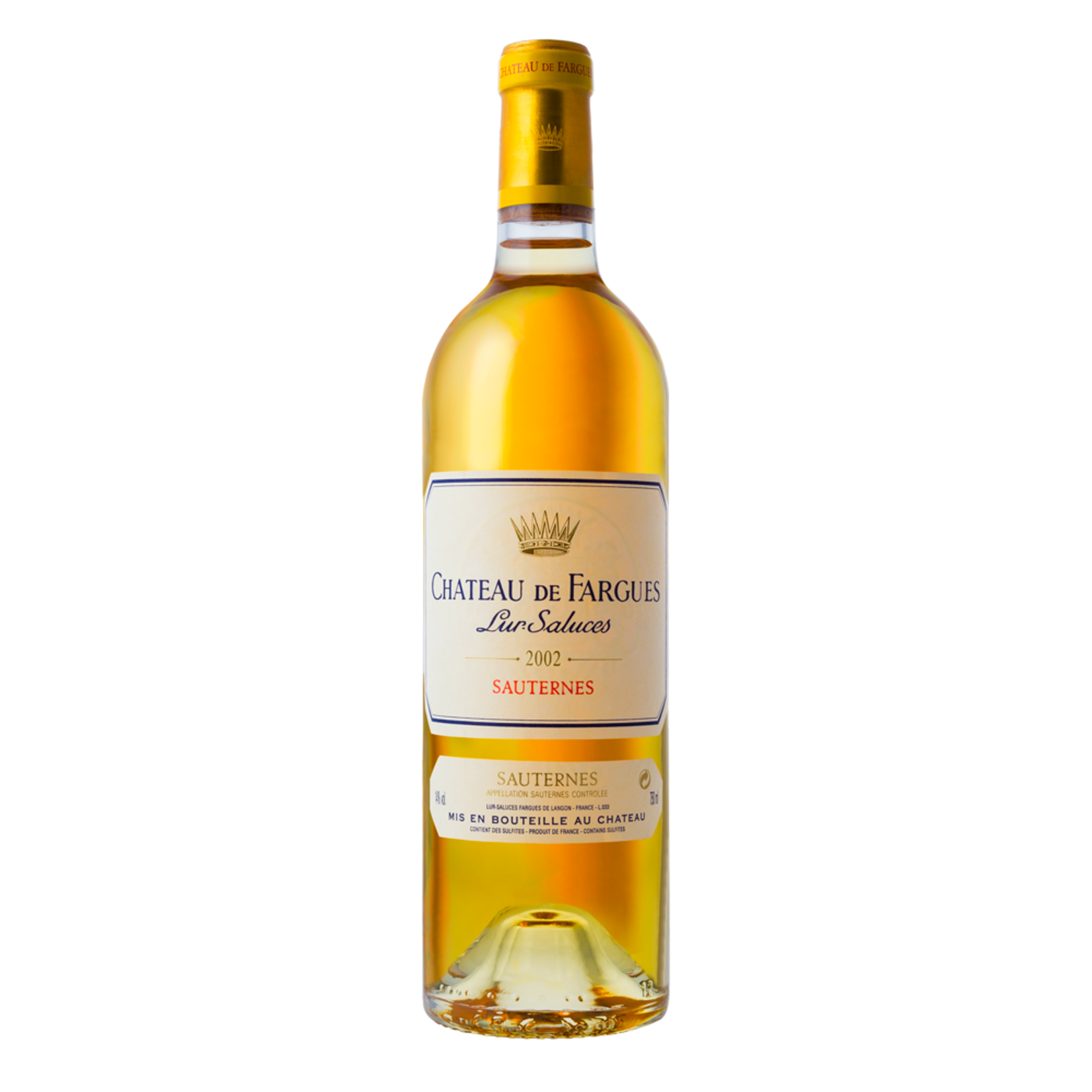
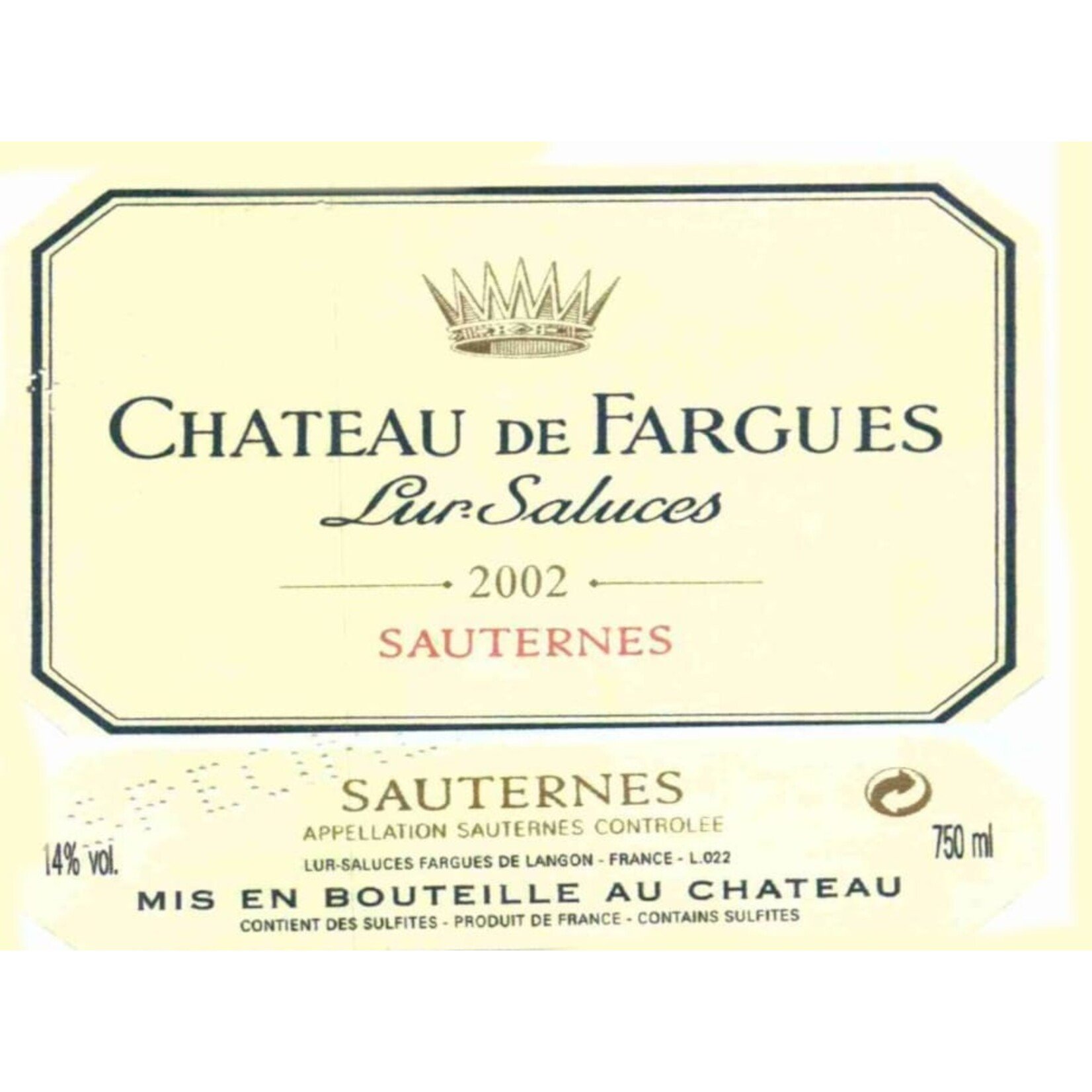
Chateau de Fargues Sauternes 2002
While Château d’Yquem was sold to LVMH in the late 1990s, Château de Fargues remains under the control of the Lur-Saluces family, with Alexandre’s friendly and highly capable son Philippe at the helm today. Their lone wine is produced from 80% Sémillon and 20% Sauvignon Blanc, harvested with meticulous care to only include pristinely botrytized fruit, with yields averaging less than a glass of wine per vine. It is aged for two full years in one-third new oak barrels, then six further months in stainless steel to assemble; fining and filtration are never employed. Emphasizing focus over ultra-richness, Château de Fargues is an elegant, streamlined, varietally expressive Sauternes with outstanding longevity.
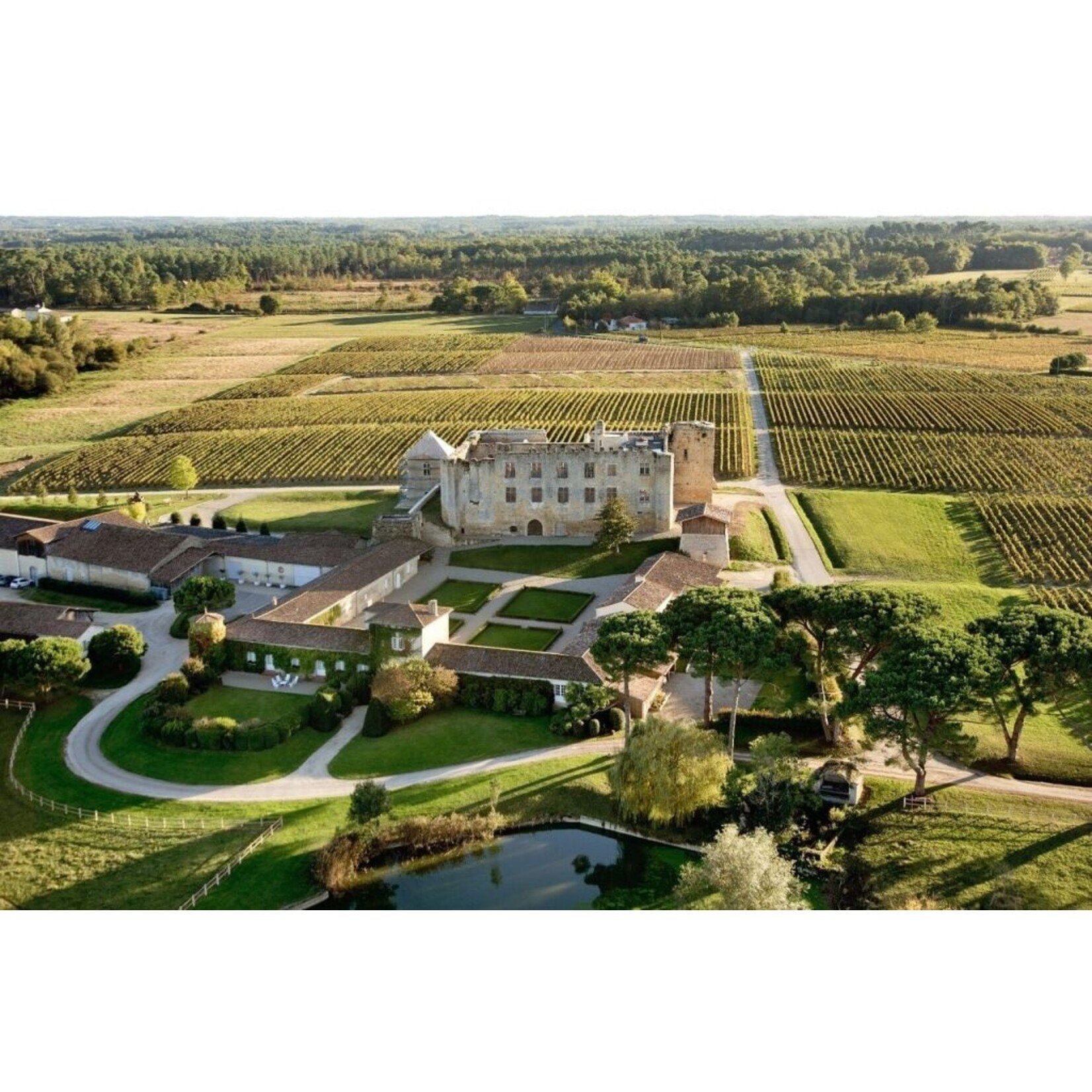
Château de Fargues (pictured above) is located in the village of Fargues de Langon, in the Sauternes appellation of Bordeaux. The Lur Saluces family have been proprietors of the estate since 1472, and enjoyed particular winegrowing acclaim in the 18th and 19th centuries when their portfolio of châteaux included Château d'Yquem, the only estate to hold Premier Cru Supérieur status in the Sauternes. The Lur Saluces family sold Yquem in 1999, and to this day Château de Fargues is often referred to as Yquem junior.